
William Kist is a research scholar that studies the advancement of technology for pedagogical purposes in the classroom. He is a former High School English teacher who is currently a Professor of Teaching, Learning, and Curriculum Studies at Kent State University. He has over 15 years of experiences in the classroom and now works closely with teachers who want to adopt new technologies in the classroom. He has over 50 articles and books to his credit with three books (including his newest book) on blended learning and new media literacies. Mr. Kist has spoken all over the country giving his insights and keynote addresses to some of the most interesting academic conferences including:
- December, 2016, American Reading Forum, Sanibel Island, FLA
- July, 2016, 30th Annual High Schools That Work Conference, Louisville, KY
- May, 2015-October, 2015, Coxsackie-Athens (NY) Schools (two days and two webinars)
- September, 2014-April, 2015, Delaware Department of Education
- November, 2014, National Dropout Prevention Center Conference, Louisville, Kentucky
This is, of course, a small sampling of a number of talks, lectures, and keynotes he has offered but the last of this list remains the most interesting to me. Mr. Kist is a firm believer that technology in the classroom might actually be able to save many troubled students from dropping out of high school.
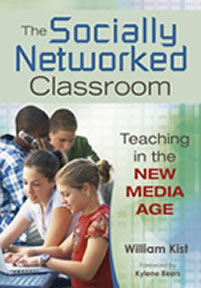
In his book The Socially Networked Classroom Mr. Kist offers constructive ways to implement technology in the classroom under the basic question of “What would happen if teachers could bring the world inside the classroom”? His idea began when he noticed students leaving class immediately checking their phones and “plugging back in” to the outside world. Initially, he makes the argument about safety concerns and how children were once thought of as adults and the need to return to a “not so safe” age of responsibility and accountability. “It wasn’t too long ago,” he writes on page 9, “that children took an active part in the adult world.” (Kist 2009). Once establishing the safety concern for students Mr. Kist moves towards giving teachers power with technology without overwhelming them. In an extremely interesting way of distributing the information as to the teacher’s technology level with coffee sizes at Starbucks!
- “Short” for nearly non-wired classroom
- “Venti” for classrooms that may not look like traditional classrooms
- “Grande” for high tech environments
“But this is not a cheerleading book in which glowing portraits are provided of the transformative power of Web 2.0. This book, rather, aims to chronicle the sometimes messy first steps of educators who are attempting to include social networking inside real schools and who are grappling with all the challenges that come along with this new kind of teaching” (Kist 2009)
Although much shorter than I had expected (coming in at roughly 44 pages), Getting Started With Blended Learning is also a good introduction for teachers to begin the first attempts at a “plugged in” classroom. In this book, Mr. Kist is much more to the point and gives examples of tools and how to use them in the classroom. It would be said that a teacher should at least be casually knowledgeable about the different tools he does offer reliable and tested ideas for teachers to try them out with real students.

 Welcome to ChuckMorgan3.com